

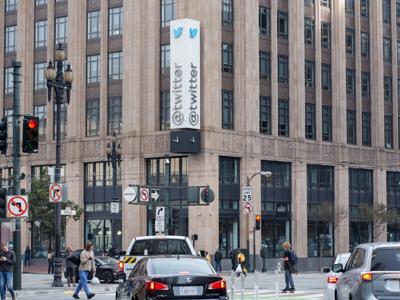

Former Supervisor Jane Kim may have sponsored what’s known as the Twitter tax break but her successor is not inclined to renew it.
Supervisor Matt Haney, who now represents the area, instead called for a hearing at Tuesday’s Board of Supervisors meeting to assess its legacy. The Central Market Tax Exclusion passed in 2011, is set to expire in May, and has served as a source of anger for low-income residents battling gentrification.
“The hope was that this tax break would lead to good-paying jobs for residents,” Haney said. “I personally don’t know if the tax break met all of its goals and I have questions about it.”
His questions primarily revolved around how many jobs were actually created, who they went to, how companies who benefited spent the money they saved, what was promised versus what was delivered, and how the city would have been different without it. Haney is also seeking how to better mitigate the impacts of jobs on housing, especially given the new Central SoMa development plan opposed by anti-displacement groups like SOMCAN.
Kim introduced the payroll tax break in 2011, when San Francisco’s economy was hurting from the recession. It was supported by former Mayor Ed Lee in an effort to draw tech companies and their jobs.
By 2014, it was declared a success in that it brought in $7.6 million more in business taxes after costing the city just $4.2 million in waived taxes. But the Civic Center area also saw a surge of evictions from 2013 to 2015, according to the Anti-Eviction Mapping Project.
Supervisors like Haney and Aaron Peskin are of the sentiment that it has overstayed its welcome and that it’s time for a new tax structure.
“We still have a neighborhood that rife with vacant storefronts and empty lots and it’s something that severely impacts the quality of life,” Haney said on Tuesday.
Whether or not the tax break is renewed, the passage of November’s Proposition C represents a shift. Companies making more than $50 million a year — likely some who benefitted from the tax break — are paying a gross receipts tax that, if the legal challenge is dismissed, is estimated to fund $300 million annually for homelessness services.