


Earlier this week, the Board of Supervisors officially adopted the NACTO guidelines with as much glee as if they they were taking home the cutest puppy from the humane society.
Never mind the cute puppy, what the hell are NACTO guidelines, you ask, and why are we adopting them?
NACTO, or the National Association of City Transportation Officials, is exactly what it sounds like: a bunch of people who think that they can tell us how to make cities better …and surprise: the NACTO Designing Cities Conference, is happening October 22-25, so the PR timing couldn't have been better.
[jump]
Before this week, the city was apparently just guessing about street design. Maybe somebody in City Hall aimlessly tossed a dart at a board and hit the mark that said “bulb-out” or “bioswale” and that's how we got those. Okay, so that's not really how it went, but adopting these guidelines makes the city planning process all that more transparent and accessible to just about anybody who cares. It also updates city planning in San Francisco to reflect the current thinking on street design across the country — and around the world for that matter.
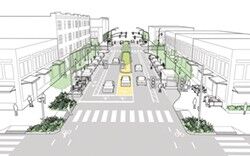
There are two relevant aspects to these new guidelines — the NACTO Urban Bikeway Design Guide and the NACTO Urban Street Design Guide. They overlap a bit, but the goal of both is to plan streets that are “safe, sustainable, resilient, multi-modal, and economically beneficial, all while accommodating traffic.”
That’s a tall order, especially in bike-friendly, car-friendly and pedestrian-friendly San Francisco.
These new guides spell out some hard rules that we can actually apply to the roads, and that's in addition to our Better Streets Policy. Here are some of the highlights that should change the look and feel of San Francisco streets:
Lane Width: NACTO recommends a lane width of 10 feet. Lanes in San Francisco range from around 8 feet to around 13 feet. Wide lanes promote speeding, believe it or not, but narrow lanes do not decrease flow or capacity according to NACTO, so narrower lanes are actually better.
Bike Lanes: NACTO says that bike lanes should be at least 6 feet wide, and whenever possible wide enough for two cyclists to ride side-by-side. They also believe things like bicycle safe gutters and grates (thank God) and no parking signs will discourage cyclists from parking in bike lanes.
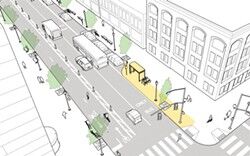
Parklets: NACTO provides nuggets of wisdom about parklets, saying “Parklets should be heavy enough to make theft impossible or unlikely.” If you can achieve that, then parklets can “increase foot traffic, and in some cases, revenue, for adjacent businesses.
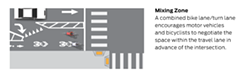
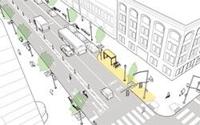
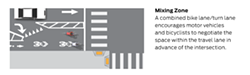
Intersections: Bike lanes and intersections almost never get along. Luckily, NACTO has come up with all kinds of schemes to make it harder to get hit by a car at an intersection, like the green boxes, something called the “mixing zone.”
Bicycle Boulevards: According to NACTO, “Stop signs along a bicycle boulevard increase travel time for bicyclists and may be viewed as unnecessary, resulting in low compliance and unpredictability.” So the organization suggests getting rid of them. Smart.
There’s plenty of more guidelines to read about on the NACTO website. Or you can wait to see how the streets of San Francisco blossom into bike and pedestrian-friendly butterflies full of bioswales, bulbouts, chicanes, pinchpoints, parklets, and more.